Great Steak & Mushrooms for Father’s Day!
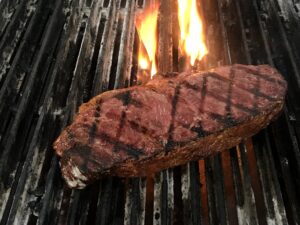
Father’s Day Best Steaks
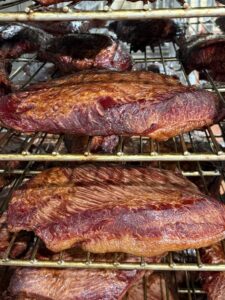
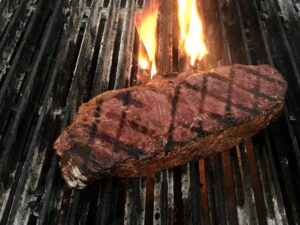
JR Ranch has the BEST grass fed and grass finished, Angus Beef Sirloin, Petit Sirloins and Brisket! JR Ranch has the ONLY beneficial prebiotic cultured steaks and brisket in the world, that diminishes the bad for you amino sugars that contribute to inflammation. JR Ranch was also recently honored by Fast Company as “A World Changing Idea” for our probiotic culturing process to improve the health qualities of meat!
- Sirloin Steaks are ONLY THE CENTER CUTS from the sirloin.
- Petit Sirloin Steaks from the remaining sirloin.
- Brisket is from the larger FLAT cut for the most consistent eating.
LIGHTLY SMOKED AFTER CULTURING FOR A FULL RICH FLAVOR!
https://jrranchfoods.com/the-market
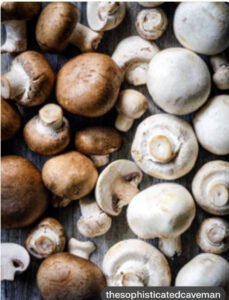
MUSHROOMS FOR FATHER’S DAY FEAST
American white and baby Bella mushrooms are two stages of the same species, often grown in controlled cave‑like environments for steady temperature, humidity, and yield. They’re mild, umami‑rich workhorses in the kitchen with a surprisingly dense micronutrient profile and some useful health associations.
What types are these mushrooms? Both white and “baby Bella” mushrooms are *Agaricus bisporus*, the most widely cultivated edible mushroom globally.- White (button) mushrooms are the youngest, bred for that snow‑white cap and very mild flavor.- Baby Bella (cremini) are the same species harvested a bit older from a brown strain, with a tan‑to‑brown cap, firmer texture, and deeper flavor; left even longer, they become portobellos.
Historically, *Agaricus* cultivation moved into underground spaces—caves, tunnels, abandoned quarries—because they naturally offer the cool, damp, low‑light conditions mushrooms prefer. Modern “cave‑grown” production in the U.S. often means climate‑controlled rooms or repurposed underground spaces that mimic those conditions for consistency and biosecurity.
Where did mushrooms come from and how they’re grown? *Agaricus bisporus* is native to European grasslands and was first seriously cultivated in France, where underground caves became an early center for production. Pennsylvania later became the dominant U.S. hub, and today a cluster of farms there still produces a large share of American white and baby bella mushrooms. In cave‑style systems, growers fill trays or beds with a composted substrate, inoculate with spawn, then hold at cool, steady temperatures with high humidity and good airflow. The darkness and thermal mass of caves reduce temperature swings and light exposure, so mushrooms put energy into growth and flavor compounds rather than coping with environmental stress.
Why do mushrooms taste so good? Chefs lean on these mushrooms for umami, that savory “brothy” flavor note that reads as meaty on the palate. White buttons sit at the mild end: light earthy aroma, subtle flavor, and a sponge‑like ability to take on fats, aromatics, and stock.
Baby Bellas, being older and from a brown strain, concentrate more glutamates and related amino acids, which deepens the umami and brings in a nuttier, more robust earthiness. Their firmer texture holds up to higher heat, so browning and Maillard reactions further amplify savory notes in sautés, roasts, and braises.
Nutritional and functional benefits: Across white and baby Bella, the baseline profile is very similar: low energy density, high micronutrient density, with some bioactives you can honestly talk about in a “functional” frame. Key points per typical serving:
– B‑vitamins: Good to excellent source of riboflavin (B2), niacin (B3), pantothenic acid (B5), and some folate (B9), supporting energy metabolism and cell growth.
– Minerals: Notable copper, selenium, potassium, plus some phosphorus; cremini/baby Bellas test especially high in copper and selenium.
– Vitamin D potential: If exposed to UV or sunlight post‑harvest, they synthesize vitamin D2 from ergosterol, making them one of the very few “plant‑side” vitamin D sources.
– Fiber and prebiotics: Mushroom polysaccharides act as prebiotics, feeding beneficial gut bacteria like *Lactobacillus* and *Bifidobacterium*.
– Antioxidants: Ergothioneine and selenium contribute antioxidant capacity; epidemiological work suggests higher mushroom intake may correlate with better cognitive aging, though it’s associative, not causative.
For a functional‑foods lens, baby Bellas give you a slightly denser package of copper, selenium, B‑vitamins, and ergothioneine per cap than white buttons, with essentially the same calorie cost.
How to select and store your mushrooms: When you’re standing at retail, you can treat cave‑grown mushrooms the same as any *Agaricus* in terms of quality cues.
White mushrooms (buttons)
– Look for creamy, uniform white caps with a smooth, dry (not slimy) surface.
– Caps should be closed or just barely opening around the stem; avoid blackish‑brown spots, heavy bruising, or wet patches.
Baby Bella (cremini)
– Choose mushrooms with plump, firm caps, tan to chocolate brown, with no major dents or dark soft areas.
– Stems should look dry and intact rather than spongy or frayed.
Storage best practices**
– Transfer from tight plastic wrap into a paper bag or a container loosely covered with a towel; trapped moisture is the enemy of texture and shelf life.
– Refrigerate and aim to use within about a week; most guidance pegs quality at 7–10 days under good conditions.
- Don’t wash until just before cooking; instead, brush or wipe to remove substrate, then give a quick rinse and thorough pat‑dry.
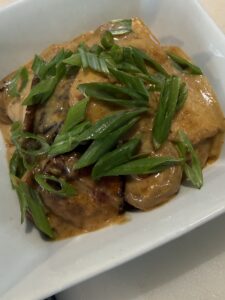
BEST MUSHROOM SAUCE FOR FATHER’S DAY STEAK
Serve 4 to 6 Steaks
2 Pints of White or Baby Bella mushrooms, tight caps about silver dollar size, trim stems flat with the cap
1 Pints of Shiitake Muchroom caps, remove stem from cap
2 tablespoons unsalted butter
1/4cup minced garlic, fresh or prepared in tubes
1/4 cup minced ginger puree, cheat and buy in bottle or tube
1/2 cup Coconut Amino Acids or Low Sodium Soy Sauce
2 cups heavy cream
sea salt to taste as necessary
Tellecherry Black Pepper to taste
1 bunch scallions, green section cut on bias
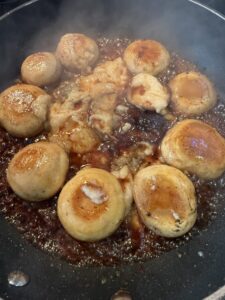
In a large skillet melt the butter over low heat. Place the mushrooms top down into the skillet while raising the heat to high. Cook until well browned on the tops them turn over. Add the garlic and ginger continue cooking until translucent and the mushrooms continue to brown. Add the Coconut Aminos or Soy sauce and allow to reduce into the mushrooms. Add the cream cooking until reduced to coat the mushrooms and thickened to sauce consistency. Adjust the seasoning as necessary with salt and pepper. Mix in half of the scallions. Transfer to your serving dish. Top the mushrooms and sauce with the remaining scallions. Serve over your steaks.
Jimmy Schmidt